— NEW THERAPY GROUP
Suicide Loss Survivors Group
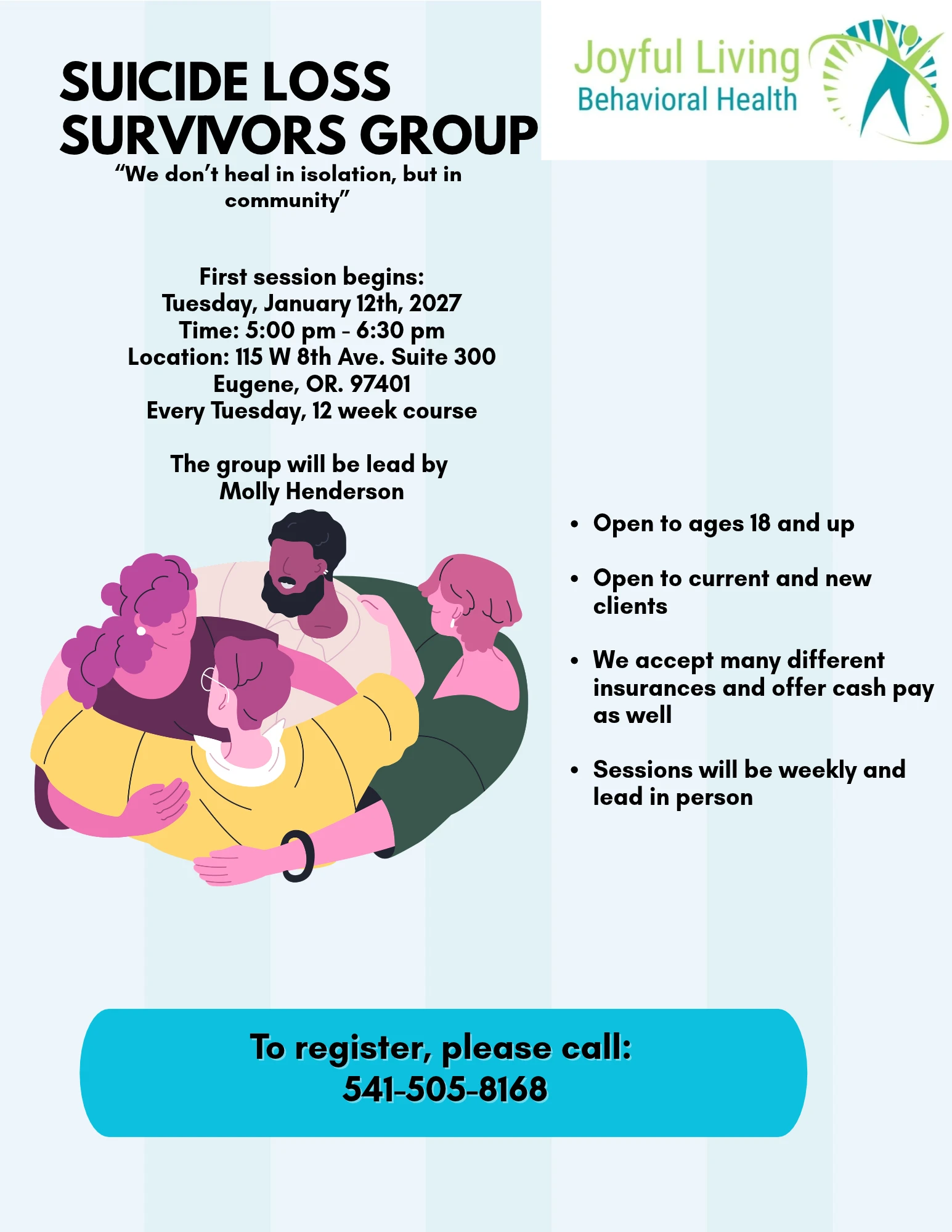
A 12-week, in-person group in Eugene for adults grieving the loss of someone to suicide — a supportive space to find connection and healing with others who understand. Tuesdays, 5:00–6:30 PM.
Losing someone to suicide can bring a kind of grief that is difficult to explain. You may find yourself searching for answers, replaying conversations, or struggling with emotions that seem to contradict one another.
At Joyful Living Behavioral Health in Eugene, OR, we provide compassionate therapy for suicide loss survivors, offering a private space to process your experience, work through difficult emotions, and navigate life after loss.
Whether your loss happened recently or years ago, therapy can help you find a way forward without feeling pressured to forget the person you love.
Understanding Grief and Suicide Loss
When someone dies by suicide, grief may be complicated by the circumstances of their death. In addition to sadness and longing, survivors may experience emotions that are difficult to understand or discuss openly.
Common experiences include:
- Guilt and self-blame: Questioning whether you missed warning signs or could have done something differently.
- Unanswered questions: Trying to understand why the death happened, even when clear answers may never be available.
- Conflicting emotions: Feeling anger, sadness, confusion, love, or relief at different moments.
- Isolation and stigma: Feeling misunderstood or uncomfortable discussing the circumstances of the loss.
- Changes in relationships: Navigating different grieving responses among family members and friends.
These reactions don’t follow a predictable pattern. Some emotions may appear immediately, while others emerge months or years later.
Although many of these experiences can arise in grief and bereavement counseling, suicide loss can involve additional questions and emotional challenges that benefit from focused therapeutic attention.
How Therapy Can Help After Suicide Loss
Therapy offers an opportunity to explore the impact of suicide loss with a mental health professional who understands that grief is personal and often complex.
Rather than following a fixed process or timeline, sessions focus on your experiences and what you need most.
Working Through Guilt and Unanswered Questions
After a suicide loss, thoughts about what could have been said or done differently may become overwhelming.
Therapy can help you examine these thoughts, explore feelings of responsibility, and develop a more compassionate understanding of yourself and the circumstances surrounding your loss.
Managing Trauma and Emotional Distress
Some survivors experience intrusive memories, anxiety, difficulty sleeping, or intense reactions to reminders of the death.
A trauma-informed approach can help you develop strategies for managing distress and gradually work through difficult experiences at a pace that feels manageable.
Navigating Relationships and Daily Life
Grief can affect how you connect with others, handle responsibilities, and participate in activities that once felt familiar.
Therapy can help you communicate your needs, establish boundaries, and navigate relationships with people who may be grieving differently.
It can also provide space to explore how you want to remember and honor your loved one while continuing to engage with your own life.
Individual Therapy for Suicide Loss Survivors at Joyful Living
Every person’s experience of suicide loss is different. The relationship you shared with your loved one, the circumstances of their death, and the ways your life has changed can all influence your therapeutic needs.
Individual therapy at Joyful Living Behavioral Health offers personalized, one-on-one care in a confidential setting.
Your therapist will take time to understand your experiences and concerns before working with you to develop an approach that fits your needs.
Sessions may focus on processing emotions, managing distressing thoughts, navigating significant dates or reminders, and developing coping strategies for everyday challenges.
You don’t need to have everything figured out before your first appointment. Therapy is a collaborative process, and your goals can change as your needs evolve.
Meet Molly Henderson, LPC
Molly Henderson is a Licensed Professional Counselor at Joyful Living Behavioral Health in Eugene, Oregon. She has experience working with individuals navigating grief and loss, trauma, anxiety, and difficult life experiences.
Her therapeutic approach draws on evidence-based methods, including Cognitive Behavioral Therapy (CBT), Dialectical Behavior Therapy (DBT), and Acceptance and Commitment Therapy (ACT).
Frequently Asked Questions About Suicide Loss Therapy
What is a suicide loss survivor?
A suicide loss survivor is someone who has lost a person to suicide. This may include a spouse, partner, parent, child, sibling, friend, or anyone who shared a meaningful relationship with the person who died.
How is suicide loss therapy different from general grief therapy?
Suicide loss therapy addresses experiences that may be particularly significant after a death by suicide, such as guilt, unanswered questions, stigma, and traumatic stress. It offers focused attention to these concerns within the broader process of grieving.
Is it normal to feel guilty after losing someone to suicide?
Yes. Guilt and self-blame are common experiences after suicide loss, even when someone was not responsible for the death. Therapy can help you explore these feelings and the thoughts associated with them.
When should I consider therapy after a suicide loss?
There is no specific timeframe for seeking therapy. Some people reach out soon after their loss, while others seek help much later. You can consider therapy whenever you feel that additional emotional support would be beneficial.
Can therapy help if my loss happened several years ago?
Yes. Grief can change over time, and difficult emotions may resurface around anniversaries, life transitions, or unexpected reminders. Therapy can be helpful regardless of how much time has passed since the loss.
Do I need to talk about the details of the death during therapy?
You don’t have to share everything immediately. Your therapist will work with you to understand your comfort level and determine how to approach difficult experiences at a manageable pace.
Suicide Loss Survivors Group Therapy in Eugene, OR
In addition to individual therapy, Joyful Living Behavioral Health is introducing a Suicide Loss Survivors Group, a 12-week therapeutic program for adults who have experienced the loss of someone to suicide.
Group therapy offers a different experience from individual sessions. It brings together people who have experienced a similar type of loss, creating opportunities for connection, shared understanding, and therapeutic discussion.
For people who have felt isolated or misunderstood after a suicide loss, being around others with similar experiences may help reduce feelings of isolation.
Suicide Loss Survivors Group — Program Details
| Program Information | Details |
| Duration | 12 weeks |
| Schedule | Tuesdays, 5:00 PM – 6:30 PM |
| Location | Suite 300 Conference Room, Eugene, OR |
| Eligibility | Adults ages 18 and older |
| Format | In-person group therapy |
How to Join the Suicide Loss Survivors Group
If you’re interested in joining Joyful Living Behavioral Health’s Suicide Loss Survivors Group, please contact the referral team to get started.
All prospective participants are required to complete a 30-minute Group Review appointment with Molly Henderson, LPC, before starting the program.
Interested in joining the Suicide Loss Survivors Group?
Contact Joyful Living Behavioral Health to ask about enrollment, upcoming sessions, and the required Group Review appointment.